

The Organized Pantry: Storage Systems That Actually Work (Episode 5)
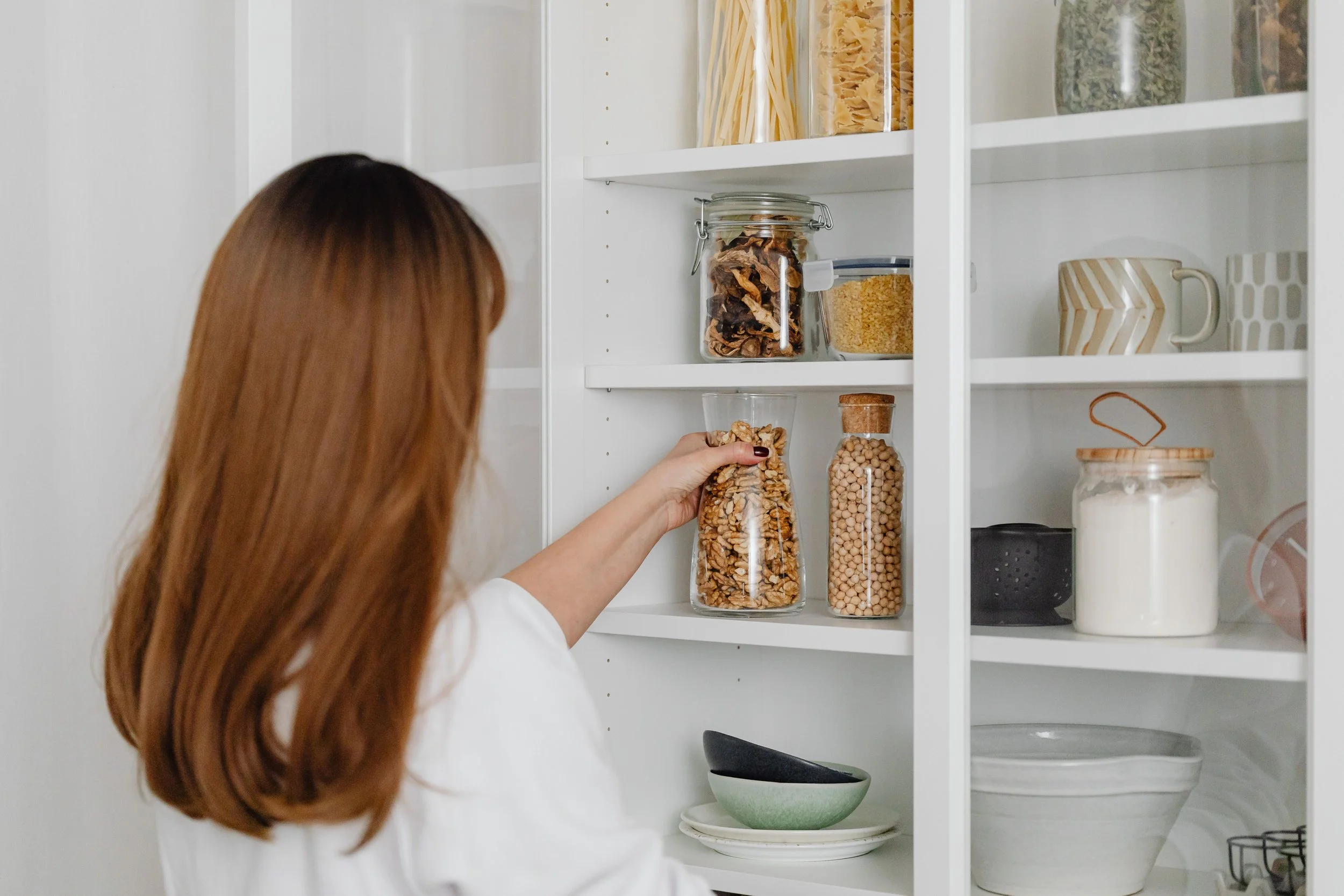
Building a Pantry That Supports Real Life
Welcome back, food fans.
In Episode #1: The Foundations of a Working Pantry System, we established the principles of visibility, accessibility, and rotation. In Episode #2, we explored when airtight storage helps—and when it does not. In Episode #3, we addressed bulk storage and how to prevent confusion. In Episode #4, we clarified how to properly store root vegetables using airflow, darkness, and temperature.
Today, we bring all of those ideas together.
Because a well-functioning pantry is not built from individual decisions.
It is built as a system that works within the physical structure of your home.
The Reality Most Pantry Advice Ignores
Most pantry organization advice assumes:
• uniform shelves
• ideal dimensions
• unlimited flexibility
But real kitchens are not designed that way.
Shelves vary in:
• depth
• height
• accessibility
• structural support
And those physical constraints directly influence:
• what you can store
• how safely you can store it
• how easily you can access it
A pantry system that ignores these realities will always create friction.
A Real-World Example
In my own home, built in the late 1970s, the pantry shelves vary in depth:
• approximately 7 inches on one side
• approximately 11 inches on another
• and slightly deeper shelving on the back wall
That variation alone required a more thoughtful approach to storage.
Because a container that works perfectly on one shelf may not function at all on another.
The Core Principle
Here is the idea that brings this entire series together:
Your storage system must match your space—not fight it.
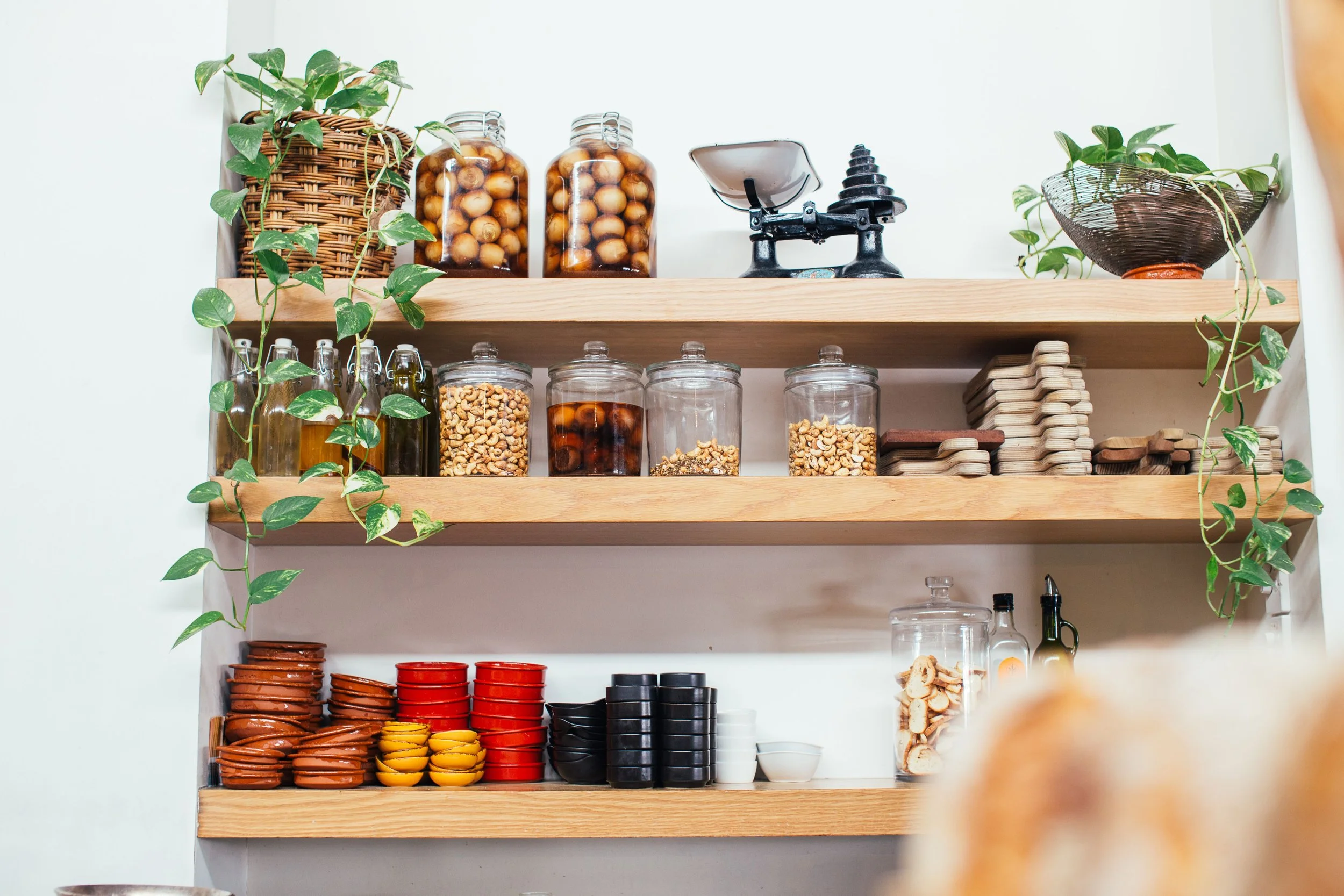
Understanding Shelf Depth (And Why It Matters)
Let’s break this into practical categories.
Shallow Shelves (5–8 inches deep)
These are often underutilized—but incredibly powerful when used correctly.
Best for:
• single-row storage
• frequently used ingredients
• smaller containers
• spices and baking essentials
Avoid:
• stacking items
• deep bins
• large or heavy containers
Why it works:
Everything is visible.
Nothing gets lost.
This directly supports meal planning and quick decision-making, because you can immediately see what is available when researching recipes or building meals.
Medium Shelves (9–12 inches deep)
This is the most flexible range.
Best for:
• standard pantry containers
• double containment (bag + bin)
• moderate bulk storage
Use:
• rectangular containers to maximize space
• front-to-back grouping
Watch for:
• items getting pushed to the back
This is where the principles from Episode #3 (bulk storage) become essential.
Deep Shelves (12 inches or more)
These are the most prone to becoming disorganized.
Best for:
• bulk storage
• overflow ingredients
• grouped bins
Requires:
• pull-forward bins
• containers with handles
• clear grouping systems
Without structure, deep shelves quickly become:
storage without visibility
Which works against everything we established in Episode #1.

Safety and Container Choice
Shelf depth also influences safety, which is often overlooked and shouldn’t be.
Family members, children, and pets can accidentally come to harm if something falls from a shelf. Glass can break and cause cuts. Canned goods can easily break a bone or worse.
Since I live near a certain rocket testing facility that sometimes tests VERY enthusiastically, I must also be aware of what material my storage containers are made of. Pickles, jams, and jarred sauces are gradually finding their way into baskets so they don’t vibrate off the shelves. Many of you may not have vibrational and harmonic challenges to your storage system, but I am sure that some of you have similar challenges.
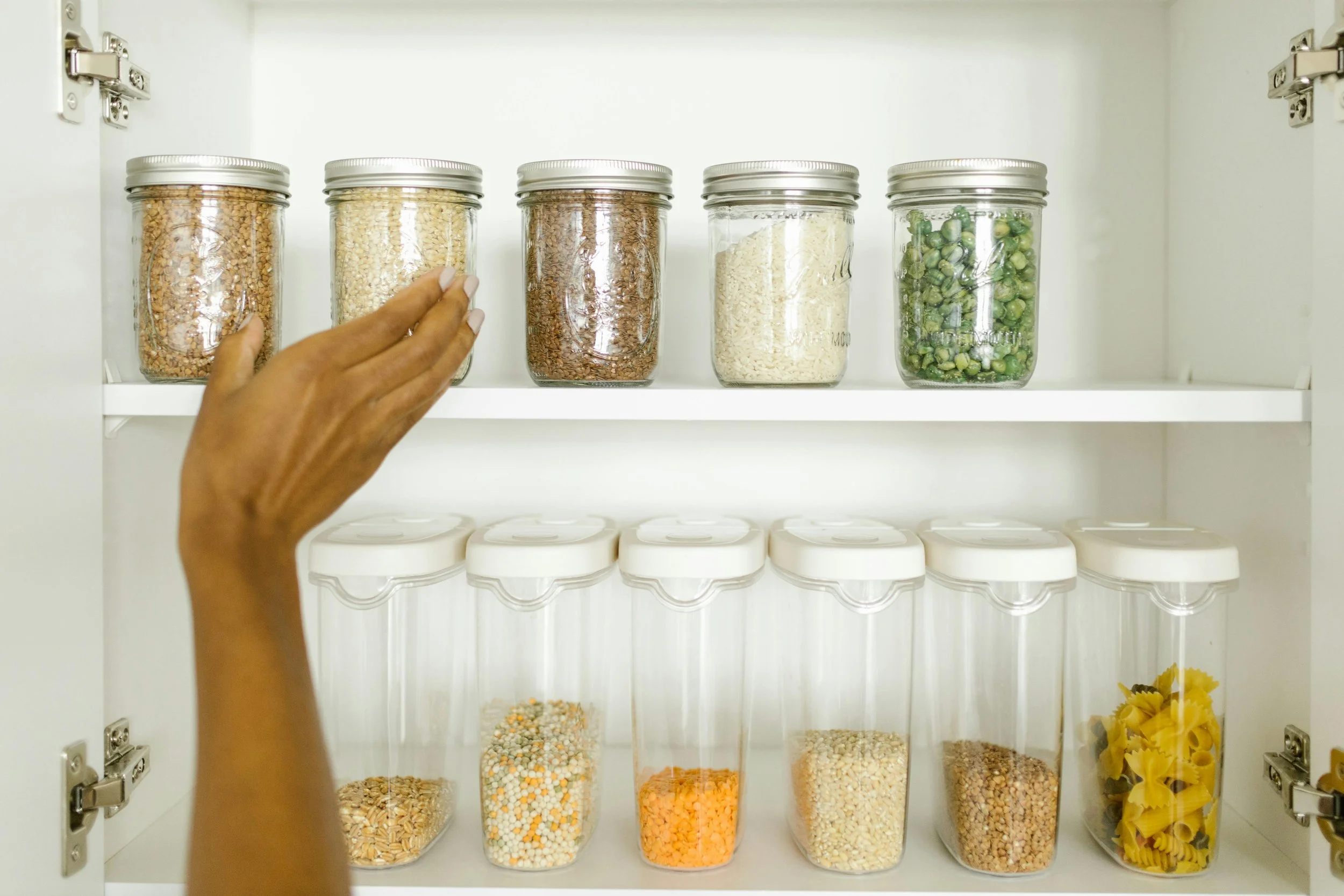
Glass vs. Plastic in Real Use
As discussed in Episode #2, both materials have advantages.
But shelf depth changes how they function.
Shallow Shelves
Glass works well:
• easier to access
• minimal reach required
• lower tipping risk
Medium Shelves
Both glass and plastic work:
• depends on usage frequency
• depends on weight
Deep Shelves
Plastic is often more practical:
• lighter to pull forward
• less risk if dropped
• easier to manage in bulk quantities
A Simple Guideline
A beautiful container that is difficult—or risky—to reach is not functional storage.
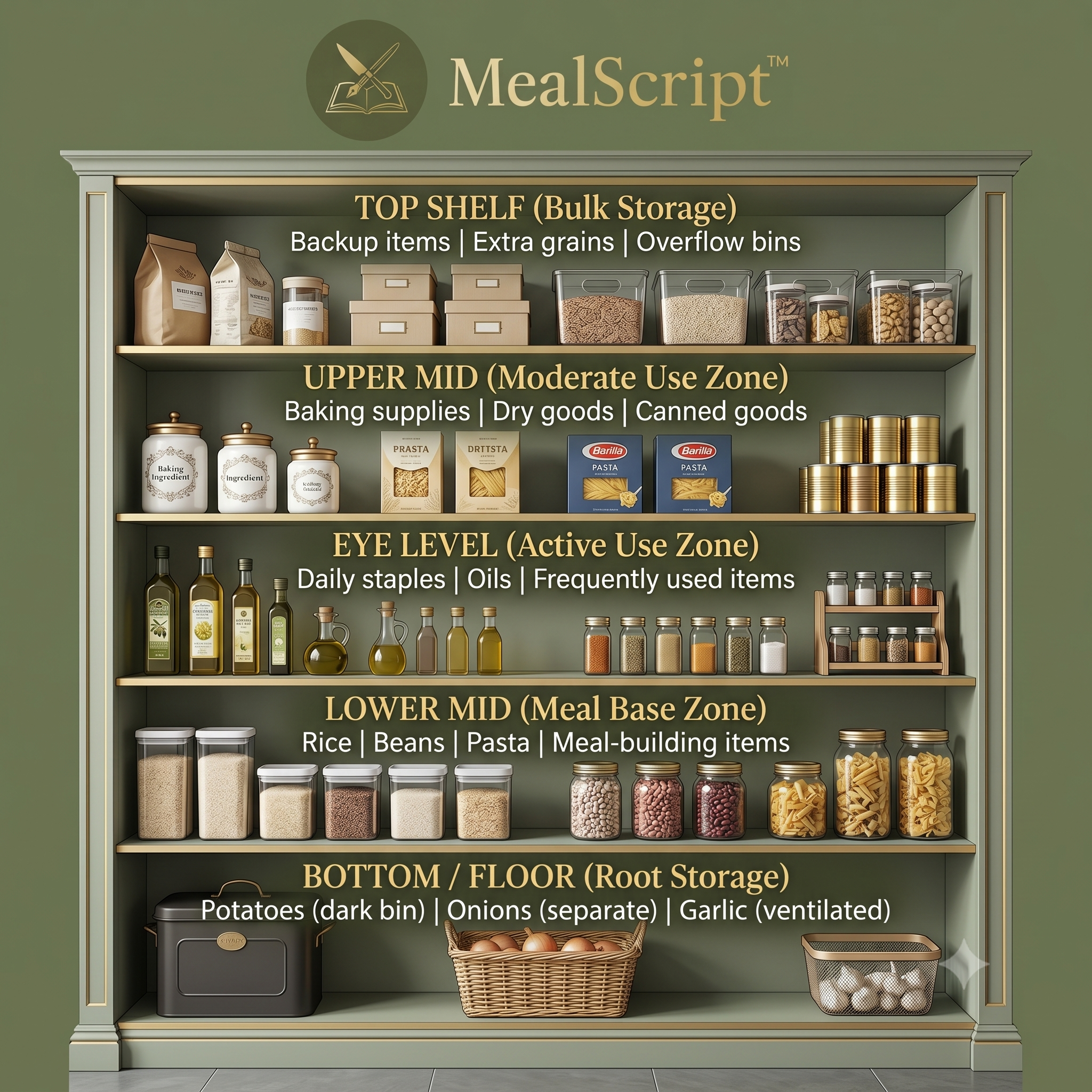
📥 Pantry Blueprint Download: Want to keep this layout handy while you reorganize? CLICK HERE to download and print our high-resolution MealScript™ Pantry Layout Framework Diagram for your kitchen.
Designing Zones That Actually Work
Now we combine everything.
A functional pantry is not just organized—it is zoned intentionally.
Suggested Pantry Zones
1. Active Use Zone (Eye-Level)
• frequently used ingredients
• oils, grains, daily staples
2. Meal Base Zone
• rice
• beans
• pasta
(This connects directly to your earlier blog series on resilient meals.)
3. Baking Core
• flour
• sugar
• leavening agents
4. Bulk Storage Zone
• extra bags of staples
• backup ingredients
5. Root Storage Zone
• potatoes (dark + ventilated)
• onions (separate + ventilated)
• garlic
(As discussed in Episode #4)
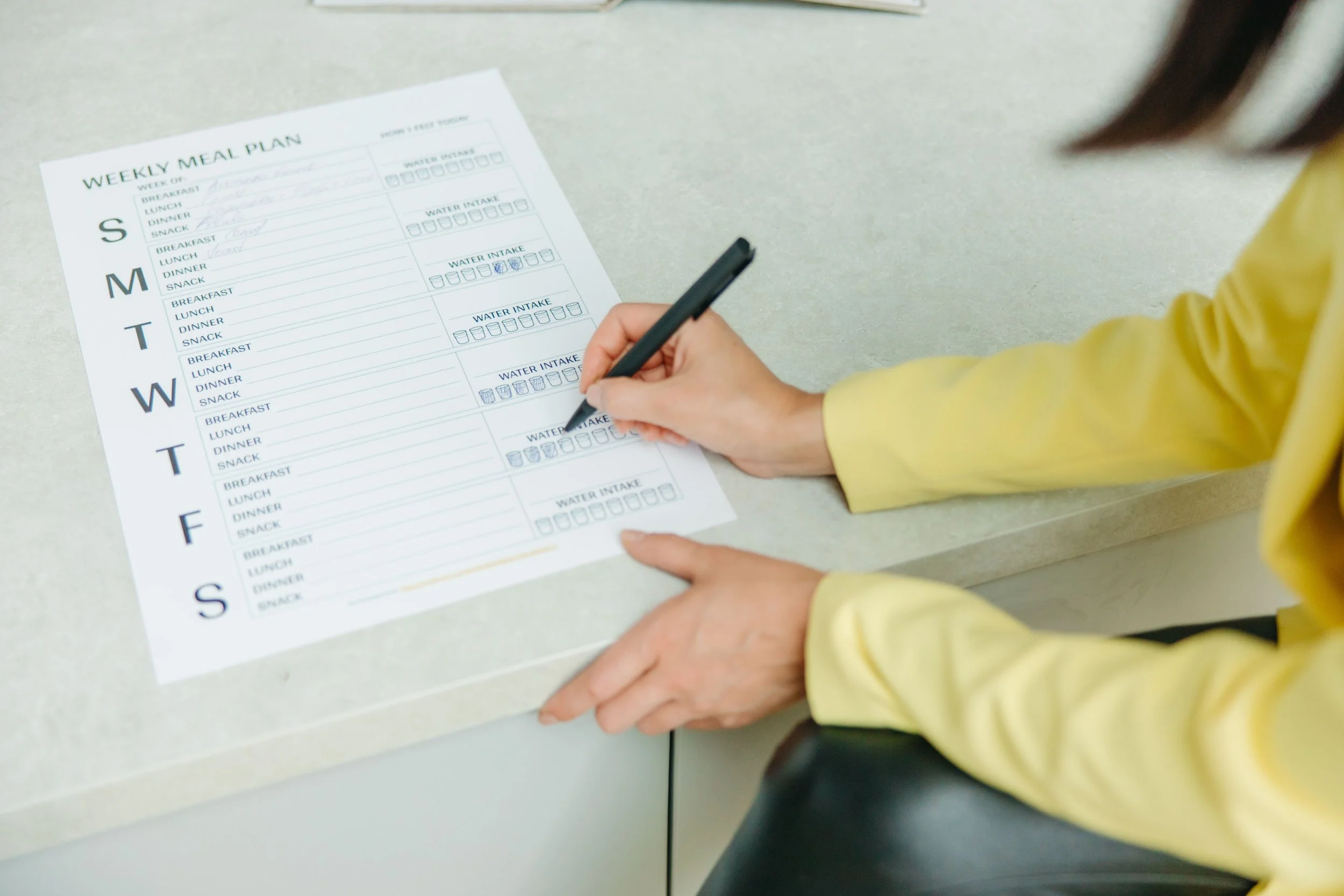
Why This Matters for Meal Planning
When your pantry is aligned with your physical space:
• ingredients are easier to find
• quantities are easier to assess
• meals are easier to plan
You spend less time:
• searching
• reorganizing
• second-guessing
And less time:
• researching recipes unnecessarily
• making duplicate purchases
Instead, your pantry becomes:
a starting point for planning meals
—not an obstacle.
A System That Reduces Friction
The goal of this entire series has not been perfection.
It has been reduction of friction.
A working pantry system:
• makes cooking easier
• makes planning meals faster
• reduces waste
• supports consistency
These are the same principles that supported kitchens during the Great Depression—and they remain just as valuable today.
Especially in a time when grocery costs are rising, and households are looking for practical ways to stretch their food budgets.
A Philosophy for Real Kitchens
In The Organized Cook’s Pantry: Strategies for Efficiency and Flavor, I discuss how pantry systems should be designed to support real life—not ideal conditions.
A functional pantry:
• reflects how you actually cook
• adapts to your physical space
• evolves over time
It is not static.
It is a working system.
This Week’s Kitchen Challenge
Choose one shelf in your pantry.
Just one.
Ask:
• Does this shelf match the type of storage I’m using?
• Are the containers appropriate for its depth?
• Is anything difficult—or unsafe—to access?
Make one adjustment.
That is enough.
Closing Thought
A well-designed pantry is not about having more.
It is about using what you have more effectively.
And when your kitchen supports that goal, everything else becomes easier.
Stay hungry, my friends.
—
Kimberly Fehler
Owner & CEO
MealScript
#MealScript #PantryArchitecture #KitchenZoning #ShelfDepth #OrganizedPantry #HomeManagement #KitchenSafety #KitchenEfficiency #SmartMealPlanning #ResilientKitchenMcGregor
