

The Organized Pantry: Storage Systems That Actually Work (Episode 1)

The Foundations of a Working Pantry System
Welcome back, food fans.
In our previous series, we explored how historical kitchens relied on simple, adaptable ingredients to create nourishing meals in times of economic uncertainty. Those kitchens were not built on abundance, but on thoughtful use of what was available.
But there is an important detail we have not yet fully explored.
Those kitchens did not function well simply because of the ingredients they used.
They functioned well because of how those ingredients were stored and organized.
Today, we begin a new conversation.
Storage Is Not About Aesthetics
Modern discussions of pantry organization often focus on appearance.
Clear containers. Matching labels. Perfectly aligned shelves.
While there is nothing wrong with a visually pleasing pantry, appearance alone does not create a functional system.
A working pantry is not defined by how it looks.
It is defined by how well it supports daily cooking and long-term meal planning.
My measure of a functional pantry is how quickly I can grab ingredients to make a last-minute meal. There are moments when time is of the essence.
A well-designed pantry should answer a few simple questions quickly:
• What ingredients do I have?
• Where are they located?
• How soon do they need to be used?
If those questions are difficult to answer, the system is not working—no matter how visually appealing it may be.

The Difference Between Storage and Systems
One of the most common challenges in modern kitchens is the assumption that storage and organization are the same thing.
They are not.
Storage is where you put things.
A system is how those things function over time.
For example:
Placing flour in a container is storage.
Knowing how much flour you have, when to replenish it, and how it fits into your weekly cooking is part of a system.
Historical kitchens understood this difference intuitively.
Ingredients were not just stored.
They were managed.
Why This Matters Now
While this series draws from historical practices, it is shared to encourage resourcefulness at all times—especially in today’s economic environment.
Grocery costs have risen steadily, and many households are feeling the impact.
The question is no longer simply:
What should I buy?
It is increasingly:
How do I make better use of what I already have?
This is where pantry systems become essential to meal planning.
When ingredients are difficult to find, duplicated unnecessarily, or forgotten altogether, food waste increases and grocery costs rise.
When ingredients are visible, organized, and easy to use, the opposite happens.
Meals become easier to plan.
Waste decreases.
And the overall cost of feeding a household becomes more manageable.

Three Functions of a Working Pantry
Every effective pantry system supports three core functions.
1. Visibility
If you cannot see what you have, you cannot use it effectively.
This is one of the primary causes of food waste.
Ingredients get pushed to the back of shelves, forgotten, and eventually discarded.
A well-organized pantry makes ingredients easy to locate at a glance.
This does not require elaborate systems.
It requires intentional placement.
2. Accessibility
Ingredients should be easy to reach and simple to use.
If accessing an ingredient requires moving multiple items, opening several containers, or searching through clutter, it is less likely to be used.
Over time, this leads to:
• wasted food
• duplicated purchases
• frustration during meal preparation
A working pantry removes unnecessary friction.
3. Rotation
Ingredients should predictably move through your kitchen.
This is often referred to as FIFO—first in, first out.
Older items are used before newer ones.
This principle was essential in historical kitchens and remains just as important today.
Without rotation, even well-stocked pantries can accumulate expired or unused ingredients.
Common Pantry Mistakes
Even well-intentioned organizational efforts can create new problems.
Some of the most common include:
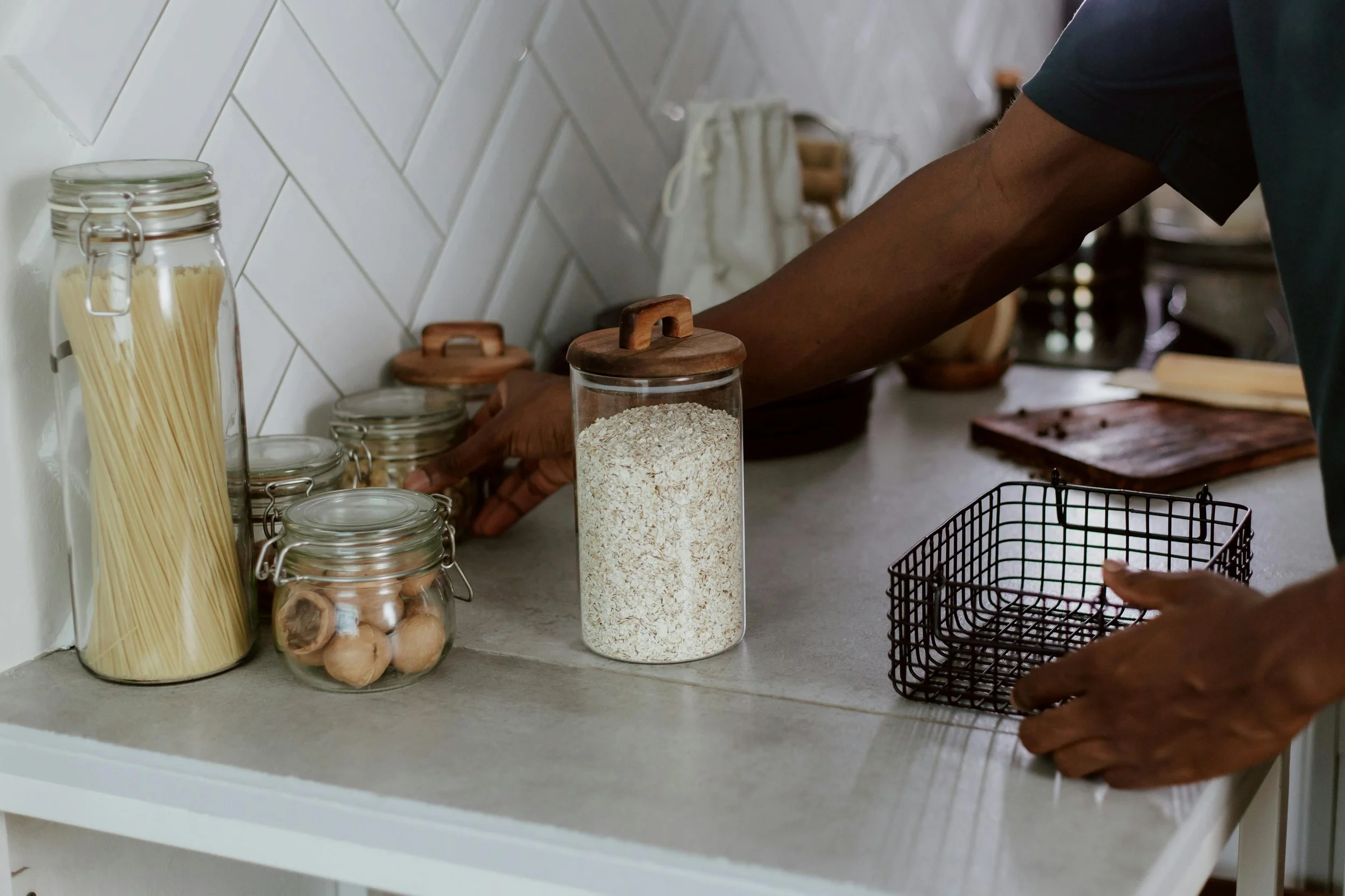
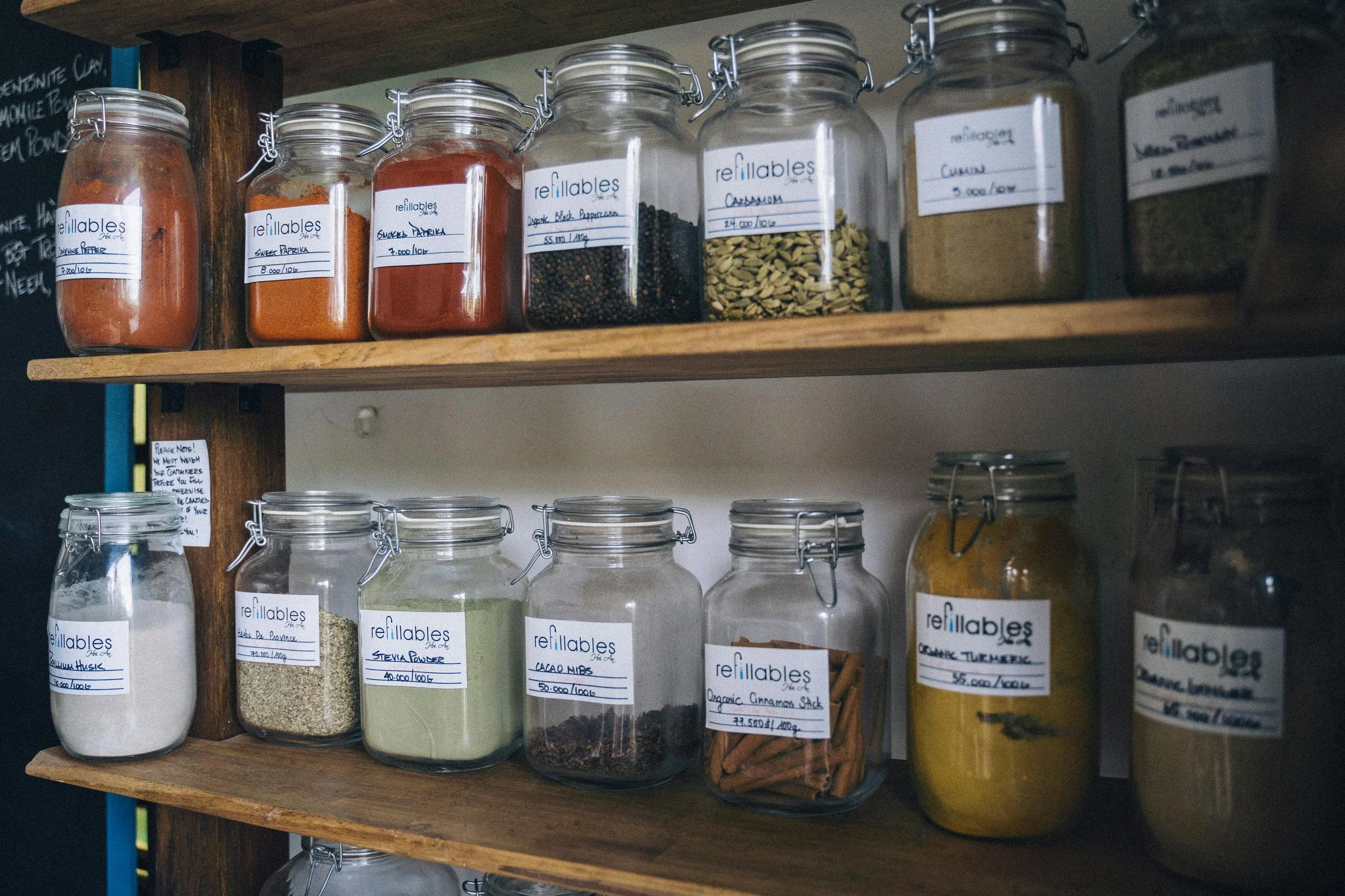
• storing everything in identical containers without clear labeling
• decanting ingredients in ways that separate them from their original instructions or expiration dates
• overfilling shelves, reducing visibility
• buying in bulk without a plan for storage or use
These issues often lead to the same outcome:
confusion instead of clarity.
A Practical Starting Point
If your pantry feels disorganized, the solution does not require a complete overhaul.
Start with one simple step:
Choose a single category of ingredients.
For example:
• grains
• baking supplies
• canned goods
Then ask:
• Can I see everything clearly?
• Is it easy to access?
• Are older items positioned to be used first?
Small adjustments in one category can quickly improve the function of the entire system.
To help you apply this week’s concepts, download the Pantry Inventory Sheet and Zone Map here.
A Philosophy for Storage
In The Organized Cook’s Pantry: Strategies for Efficiency and Flavor, I explore how storage systems influence not only how ingredients are preserved, but how they are used.
A well-organized pantry is not simply a place to store food.
It is a tool for decision-making.
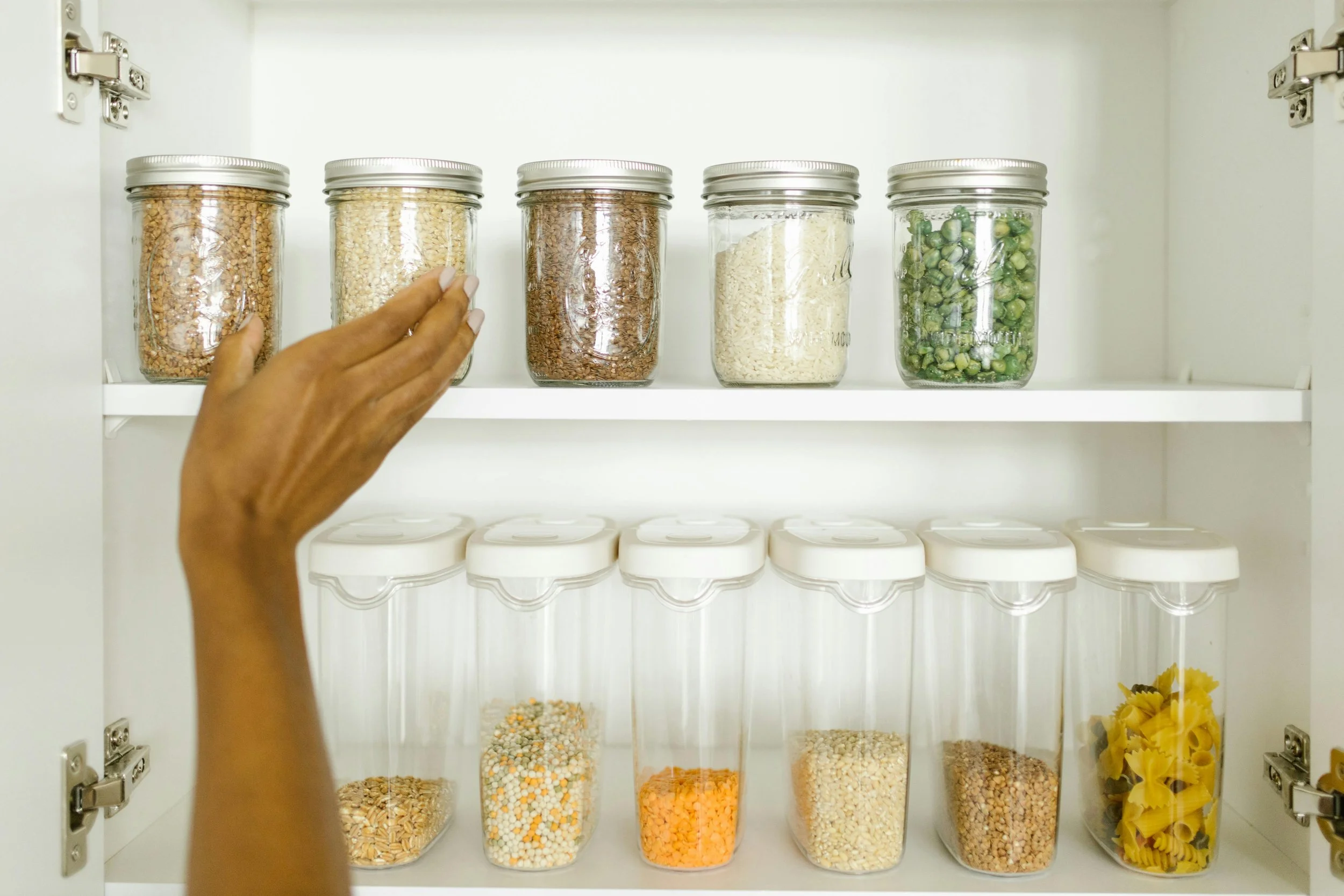
When ingredients are visible and accessible, cooking becomes less reactive and more intentional.
This is one of the simplest ways to reduce stress in the kitchen while improving both efficiency and flavor.
This Week’s Kitchen Challenge
Take a few minutes to look at one section of your pantry.
Not the entire space—just one section.
Ask yourself:
• Can I clearly see what I have?
• Is anything difficult to access?
• Are there items I have forgotten about?
Make one small adjustment.
That is all. Then, make another next week.
To track your progress, create a simple, easily accessible logbook as you build your new system.
Take time to make notes about your rationale when you make a change. What you change today, life may not allow you to remember (easily) next week.
Systems are not built in a single day.
They are built through small, consistent improvements over time.
Looking Ahead
In the next episode, we’ll take a closer look at one of the most common storage decisions in modern kitchens:
airtight containers.
We’ll explore:
• when airtight storage is necessary
• when it is not
• and the practical differences between plastic and glass systems
Stay hungry, my friends.
—
Kimberly Fehler
Owner & CEO
MealScript
PS: In case you missed the link to the printable support material earlier in the blog, click here.
#MealScript #PantrySystems #KitchenOrganization #FoodWasteReduction #StrategicCooking #PantryManagement #KitchenEfficiency #OrganizedHome #MealPlanningTips #KimberlyFehler
