

Episode #11 – Flour & Stretch Baking: Survival Architecture
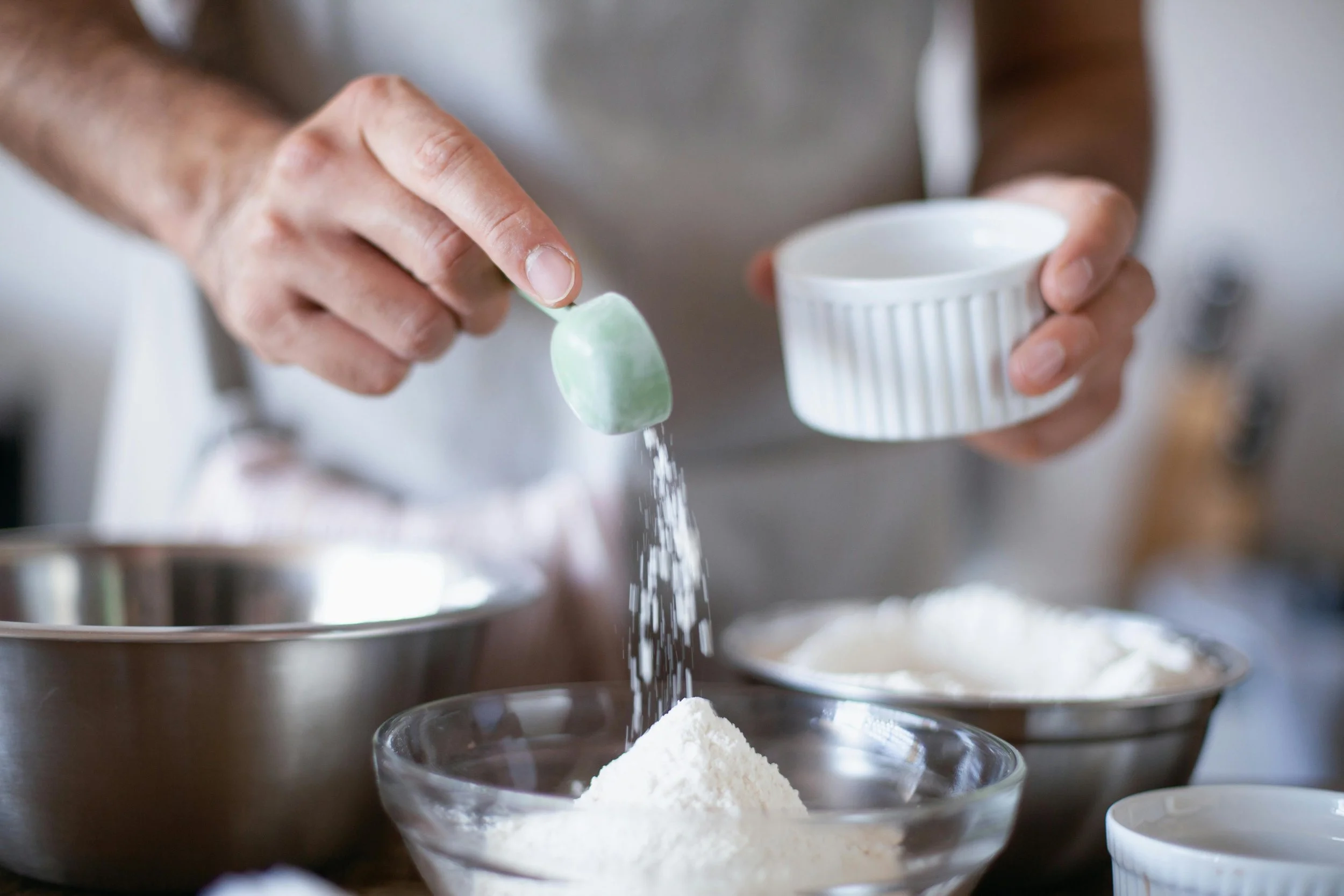
If grain was insurance, flour was architecture.
During the Great Depression and World War II rationing, flour was one of the most strategic items in the kitchen. It thickened. It bound. It lifted. It stretched.
When meat rations were tight and sugar stamps were limited, flour became the framework that held meals together.
It wasn’t about indulgence.
It was about structure.
A Brief Historical Frame
By the early 20th century, commercial roller milling had transformed flour production in the United States. What had once been ground locally in small batches became industrially milled, sifted, and widely distributed. White flour became affordable, shelf-stable, and consistent — a major shift from the variability of home-ground grain.
By the 1920s, flour was one of the most accessible calorie sources per pound. During the Great Depression, that accessibility mattered. When incomes collapsed and grocery money thinned, flour remained relatively inexpensive and widely available. It could be purchased in large sacks and stored for extended periods. It did not spoil quickly when kept dry. It required no refrigeration.
Then came World War II.
Beginning in 1942, ration books governed sugar, meat, butter, cheese, coffee, and many processed foods. Families tracked red and blue ration stamps carefully. Sugar was limited to roughly half a pound per person per week. Butter and meat were tightly controlled. Canned goods required stamps as well.
Flour, however, was not rationed by stamp in the same way. Bread prices were regulated to prevent inflation, but home baking continued. In fact, home baking often increased.
Why?
Because flour multiplied whatever else you had.
A small amount of fat became biscuits.
A thin broth became gravy.
A pot of vegetables became dumplings.
A few tablespoons of cocoa became cake.
In both the Depression and wartime years, flour was not luxury.
It was leverage.
It allowed cooks — mostly women managing households under immense pressure — to create structure and predictability in unpredictable times.
And predictability feeds more than stomachs.
What Flour Actually Does
Before recipes, let’s respect the chemistry.
Flour:
Thickens (gravies, sauces, soups)-- Think roux or slurries
Binds (meatloaf, patties)-- Use in place of crackers or breadcrumbs
Leavens (with baking soda/powder)-- pancakes, waffles
Extends (dumplings, biscuits)
Carries flavor
Understanding this is more powerful than memorizing recipes.
Basic Preparations: The Hard-Times Standards
1. Depression “Wacky Cake” (No Eggs, No Milk)
Also called “War Cake.”
2 cups flour
1 cup sugar
1 tsp baking soda
½ tsp salt
3 Tbsp cocoa
1 Tbsp vinegar
1 tsp vanilla
⅓ cup oil
1 cup water
Mixed directly in the pan.
No eggs. No butter. No milk.
Why It Mattered
Eggs were scarce.
Butter was rationed.
Milk wasn’t always available.
Vinegar + baking soda created lift without eggs.
Cost Breakdown
Flour: $0.60
Sugar: $0.40
Cocoa: $0.75
Oil: $0.40
Other ingredients: $0.30
Total: ~$2.45
Serves 9
Cost per serving: ~$0.27
Architecture.
2. Basic Cornbread (Savory, Not Sweet)
1 cup cornmeal
1 cup flour
1 Tbsp baking powder
1 tsp salt
1 egg (optional)
1 cup milk or water
2 Tbsp oil
Mixed and baked.
Cornmeal was especially important in Southern kitchens and rural areas.
Cost Breakdown
Cornmeal: $0.40
Flour: $0.30
Egg: $0.30
Milk/oil: $0.50
Total: ~$1.50
Serves 8
Cost per serving: ~$0.19
Served alongside beans or cabbage soup, it turned sides into meals.
3. Drop Biscuits
2 cups flour
1 Tbsp baking powder
½ tsp salt
4 Tbsp fat
¾ cup milk
No rolling. Just drop and bake.
Used to:
Stretch soup
Replace store-bought bread
Build shortcake-style desserts
Cost Breakdown
Flour: $0.60
Fat: $0.50
Milk: $0.50
Total: ~$1.60
Serves 8
Cost per serving: ~$0.20
4. Dumplings in Vegetable Soup
2 cups flour
1 Tbsp baking powder
1 tsp salt
1 cup milk
Dropped into simmering soup.
They absorb broth, thicken liquid, and create fullness.
Cost Breakdown
Flour: $0.60
Milk: $0.50
Total: ~$1.10
Serves 6
Cost per serving: ~$0.18
A pot of thin vegetable broth becomes hearty.
That’s strategy.
Homemade Enriched White Bread vs Store-Bought “Artisan” Loaf
Not all homemade bread is austere.
Your formula leans toward a soft, enriched loaf — closer to a premium sandwich bread than a rustic boule. That makes the comparison even more interesting.
Your White Bread Formula (1 Loaf)
2½ tsp instant yeast
1⅛ cups lukewarm water
3 cups all-purpose flour
1½ tsp pink table salt
6 Tbsp unsalted butter (room temperature)
¼ cup non-fat dry milk
½ cup dried potato flakes
This is a classic enriched structure:
Butter for tenderness
Dry milk for protein and browning
Potato flakes for moisture retention and softness
Flour as backbone
It’s engineered to stay soft longer than lean artisan bread.
Cost Breakdown (Approximate 2026 Pricing)
Flour (3 cups ≈ 13 oz)
~$0.40
Instant yeast (2½ tsp)
~$0.45
Butter (6 Tbsp ≈ ¾ stick)
~$0.90
Non-fat dry milk (¼ cup)
~$0.50
Dried potato flakes (½ cup)
~$0.40
Salt + water
~$0.05
Total Estimated Cost: ~$2.70 per loaf
Assuming 18–20 slices:
Cost per slice: ~$0.14–$0.15
Bread: Compare to Store “Artisan” White Loaf
Premium bakery loaf: $5.00–$7.00
Cost per slice: ~$0.30–$0.40
Difference per loaf: ~$2.50–$4.00
Difference per slice: roughly double.
What’s the Real Comparison?
Your loaf includes:
Real butter (not soybean oil blends)
Dry milk (protein boost)
Potato flakes (texture enhancer)
Controlled salt levels
No preservatives
Most grocery “artisan” white loaves include:
Enriched flour
Water
Yeast
Oil
Dough conditioners
Preservatives
Your loaf is richer, softer, and likely fresher — at roughly half the cost.
Rationing Context
Beginning in 1942:
Sugar was limited to about ½ pound per person per week.
Butter and meat required ration stamps.
Processed foods were tightly controlled.
Home cooks adapted:
Reduced sugar in cakes.
Used oil instead of butter.
Omitted eggs when necessary.
Replaced milk with water.
These were not “diet hacks.”
They were engineering solutions.
Strategic Takeaway
During the Great Depression and WWII, enriched breads were often reduced; butter and milk were limited. Today, your formula demonstrates something different:
Flour still multiplies.
Even when you add butter, milk solids, and potato flakes, the cost remains controlled. The largest expense in store-bought bread is not flour.
It is overhead.
If flour is architecture, enriched bread is upgraded architecture — still affordable, still strategic, just layered.
And for a pantry-centered kitchen, that matters.
The Organized Pantry Connection
Flour demands structure.
Airtight storage
Date rotation
Protection from moisture and pests
Clear labeling (all-purpose vs whole wheat vs cornmeal)
Bulk flour without organization invites waste.
Organized flour invites flexibility.
Inside The Organized Cook’s Pantry: Strategies for Efficiency and Flavor, this principle repeats: what you can see, you can use.
And flour is meant to be used.
A Gentle Reflection
If you grew up in the 1970s, you likely encountered:
Biscuits from a can
Boxed cake mixes
Pre-sliced bread in plastic
But earlier generations mixed flour by hand because it was economical, predictable, and powerful.
Perhaps “canned” biscuits, boxed cake mixes, and “grocery store” bread in bright, colorful wrappers were rare luxuries.
Maybe they were staples in your home, providing easy snacks in your after-school “latch key” lifestyle.
Flour was not indulgence.
It was control.
And in uncertain times, control matters.
There’s something profoundly satisfying about baking your own bread. It’s like it was sewn into our DNA and with a little practice, you will never look at store-bought bread the same again.
Looking Ahead
In Episode #12, we’ll upgrade flour.
Whole grain blending.
Yogurt enrichment.
Olive oil cakes.
Sourdough revival.
Because architecture can be both strong and elegant.
For your first challenge, grab one of today’s recipes and give it a road test. Either the cornbread or the biscuits will go well with a pot of pinto beans or black-eyed peas.
Happy cooking!
Kimberly
Did you try any of the simple recipes this week? We would love to see what you have created. Post pictures on your social media pages and tag us!
Bread Instructions:
White Sandwich Bread (ingredients and amounts listed above)
If you are using active dry yeast, mix it in a small bowl with a pinch of sugar and 2 Tbsp of lukewarm water. Allow the yeast to hydrate at room temperature for 15 minutes, then proceed with the recipe. IF using instant yeast, skip this step.
Measure your flour by lightly spooning it into the measuring cup, then sweep off the excess with the back of a table knife (or other straight edge).
Combine the dissolved yeast (or instant yeast) with the flour and the rest of the ingredients. Mix and knead by hand, mixer, or bread machine set on the dough cycle– until you achieve a smooth, supple dough. If using a stand mixer, this will take about 7 minutes on medium-low speed. It is complete when the dough barely cleans the sides of the bowl and might still be a bit sticky at the bottom of the bowl. (If using a mixer, I like to take it out of the mixer when the dough just barely achieves this stage and knead it by hand for the last minute or two.
Place the dough in a lightly oiled bowl, cover with plastic or a linen “cap” and allow the dough to rise at room temperature for about 90 minutes, or until it is almost doubled in bulk. Rising may take longer if you have mixed it by hand. Don’t worry, just give it enough time to become “puffy.”
Lightly grease an 8 ½” x 4 ½” loaf pan
Set the oven to 350 degrees F
Gently deflate the dough to a smooth, lightly floured surface
Form the dough into a log shape and place in the prepared loaf pan.
Cover with plastic wrap (loosely) and allow it to rise until it has cleared the sides of the pan by about an inch to an inch and a half.
The total bake time on the loaf is approximately 40 minutes. Check the loaf at 20 minutes. If the loaf is already golden brown, lightly tent the top with aluminum foil, and continue to bake for the remaining time. If you enjoy technical processes, the bread is done when the internal temperature of the dough is 190 degrees F.
Remove from the oven and allow it to cool in the pan 5-7 minutes before turning it out on a wire rack to cool. Make sure that the bread has time to cool completely before slicing.
Store in a gallon zipper bag or wrap tightly with plastic wrap.
For a smoother, more satiny top to your bread, brush the top with melted butter after turning the bread out to cool.
***Leftover mashed potatoes can easily be recycled into this bread
French Loaf (2-day bread) If you care for a lean dough– this will satisfy
4 ¼ cups All Purpose Flour
2 ¼ cups Cool Water
¾ tsp Instant yeast
3 tsp Pink table salt
Instructions:
Starting with the cool water, measure all the ingredients into a mixing bowl.
Mix on medium-low for 5-7 minutes or until the dough cleans the side of the bowl. Mixing by hand will take anywhere from 10-15 minutes (but is great for stress).
Once the dough is mixed, cover the bowl with plastic wrap and allow to sit at room temperature for 20 minutes.
Place the covered dough in the refrigerator overnight to cure slowly rise.
About three hours before you wish to bake, remove the dough from the refrigerator and place in a warm, draft-free location to come to room temperature and finish rising. (These are times that work for me– your total time could be different based on how warm or cool your house is and the elevation).
About an hour before you wish to bake, gently remove the dough from the bowl, deflating as little as possible.
Divide the dough into 2 equal pieces and gently shape them into logs, the placing them in loaf pans.
Cover the loaf pans with plastic wrap and allow to rise about 45 minutes. (This is baking in a loaf pan variation– if you want to try your hand at baking on a baking steel or baking stone, this will be different.
Preheat the oven to 475 degrees F
When the dough is ready to bake, place the pans in the oven and bake for 10 minutes. Then reduce the oven temperature to 375 degrees F and allow to bake for an additional 20 minutes. You want the crust to be firm and the color to be medium golden brown– like maple syrup. Like the sandwich bread, the loaf is done when the internal temperature reaches 190 degrees F
Turn loaves out on a wire rack to cool immediately after removing from the oven.
Allow to cool completely before slicing. Best if eaten the same day, but store in a plastic bag in the refrigerator for longer storage.
#MealScript #SurvivalArchitecture #FlourPower #GreatDepressionCooking #BudgetBaking #HomemadeBread #KitchenLeverage #FrugalWellness #StretchBaking #PantryStrategy
