

More Than a Meal: What Filipino Summers Taught Me About Food, Family, and Connection
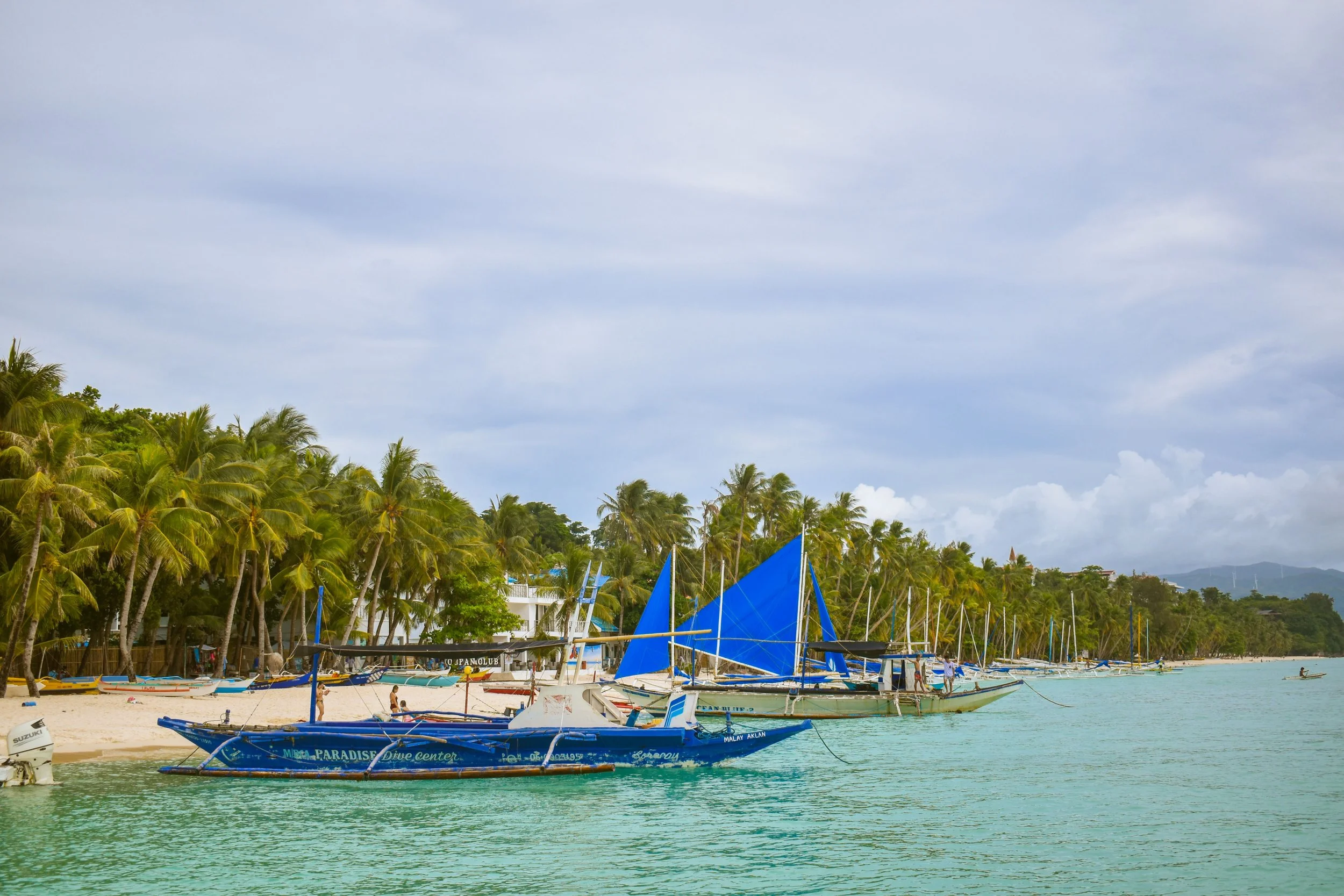
When I think about summer growing up in the Philippines, the first things that come to mind aren't the beaches or the sunny days—it's the food and the people I shared it with.
Summer in the Philippines has always been more than just a season. It's a time when schools close for break, families gather, and weekends are filled with outings, celebrations, and moments that create lasting memories. Looking back, I realize that many of my favorite summer memories weren't about where we went, but about the meals we shared along the way.

Summer Family Outings
For many Filipino families, summer means it's time to pack up the car, gather the relatives, and head out for an adventure. Whether it's a trip to the beach, a resort getaway, a visit to grandparents in the province, or a simple picnic at a local park, family outings are a cherished part of the season.
One thing that never changes is that food is always involved. Long before the trip begins, family members gather in the kitchen to prepare meals and snacks for the day. Large containers are filled with rice, grilled barbecue, pancit, lumpia, fried chicken, fresh fruit, and cold drinks. Coolers are packed, bags are loaded, and everyone eagerly anticipates a day of fun together.
Looking back, some of my favorite memories weren't necessarily the places we visited, but the moments spent sharing food, telling stories, taking photos, and laughing together. Summer outings gave us the opportunity to slow down, disconnect from our daily routines, and reconnect with the people who mattered most.
© eatwith.com
The Filipino Tradition of Boodle Fights
Few dining experiences capture the spirit of Filipino togetherness better than a boodle fight.
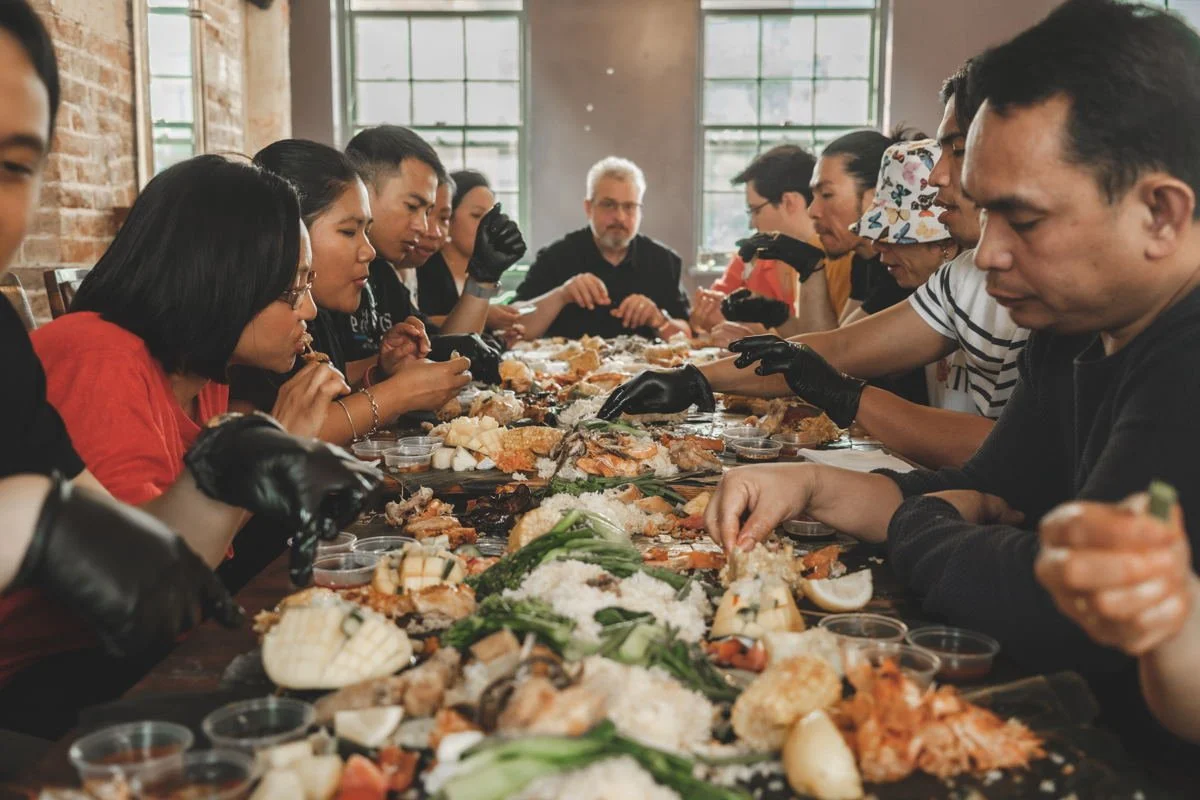
A boodle fight is a communal meal where food is laid out on long banana leaves instead of individual plates. Steamed rice forms the base, while grilled meats, seafood, vegetables, fruits, and other Filipino favorites are arranged on top. Everyone gathers around the table and eats together using their hands.
What makes a boodle fight special isn't just the food—it's the experience. There are no assigned seats, no formal place settings, and no barriers between people. Everyone shares the same meal, creating a sense of unity and connection.
During summer outings, family reunions, and celebrations, boodle fights often become the highlight of the day. They encourage conversation, laughter, and togetherness while reminding us that food is meant to be shared. In many ways, the tradition reflects one of the most beautiful aspects of Filipino culture: the belief that meals bring people closer together.
© FoodBizPH
Street Vendors and Summer Refreshments
Another thing that stands out about Filipino summers is seeing vendors everywhere selling cold refreshments to help people beat the heat.
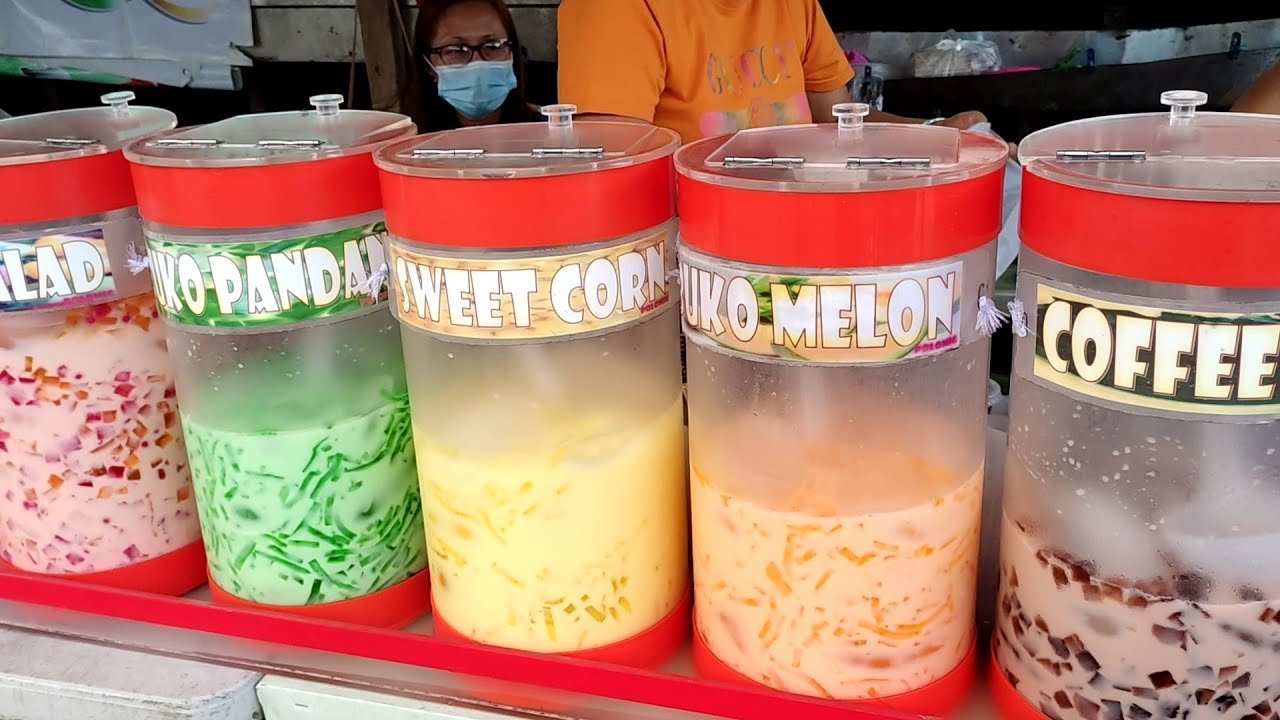
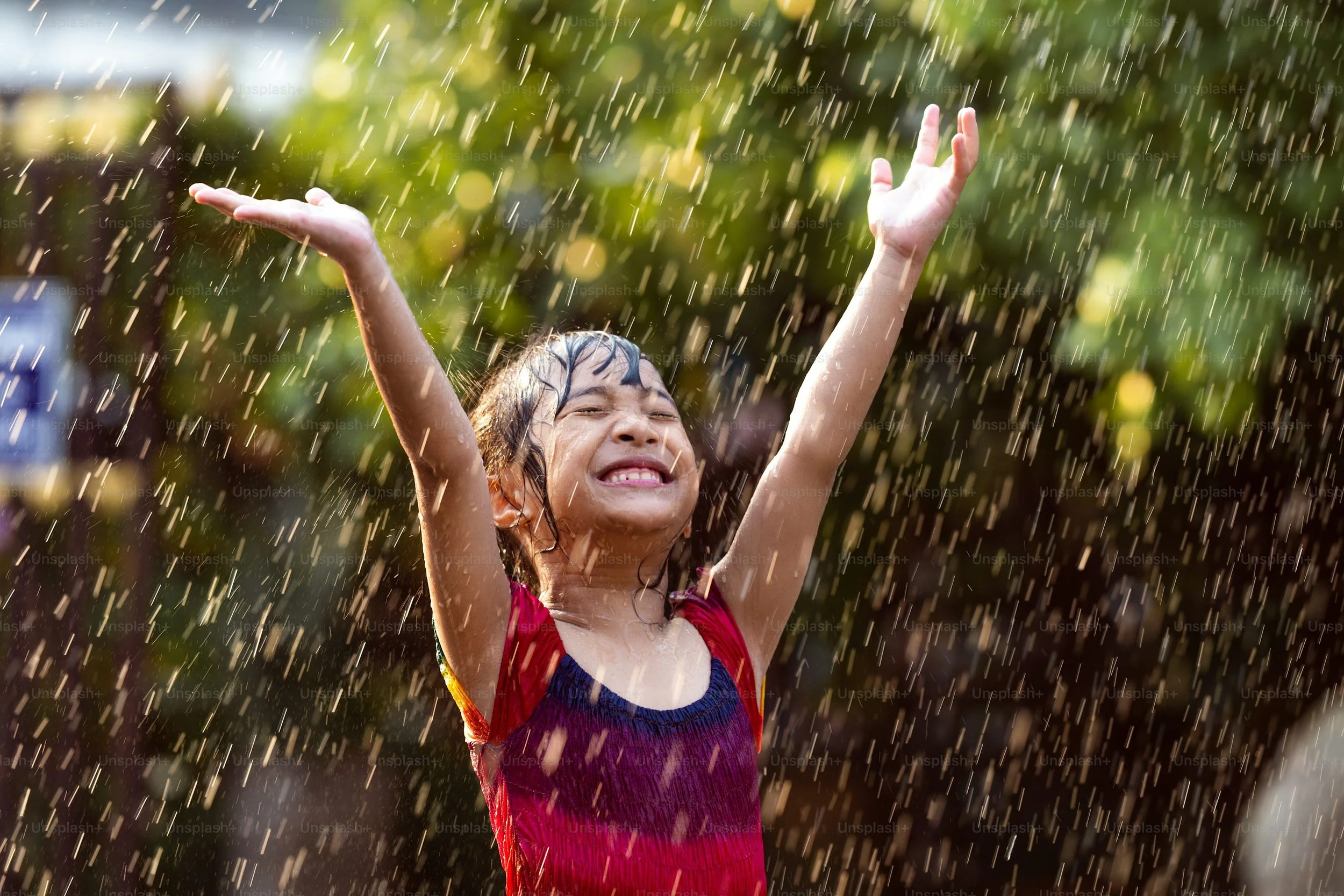
Whether you're walking through a neighborhood, visiting a local market, or spending time at a community event, you'll often find vendors selling samalamig, one of the most popular Filipino summer refreshments. What makes samalamig special is the variety of flavors and ingredients available. Depending on the vendor, you might find gulaman with sago, melon juice, pandan-flavored drinks, buko pandan, cucumber juice, fruit-flavored refreshments, and many other colorful options served over ice.
Fresh buko juice is another summer favorite. Vendors often sell coconuts chilled and ready to drink, providing a naturally refreshing way to cool down on a hot day. It's not uncommon to see people gathered around a vendor enjoying a cold drink while taking a break from the summer heat.
These street vendors are a familiar part of Filipino summer culture. Their carts often become gathering spots where children, families, and neighbors stop for a quick treat and a moment of connection. For many Filipinos, a cold cup of samalamig or fresh buko juice is just as much a part of summer as beach outings and family gatherings.
The Taste of Filipino Summer: Halo-Halo
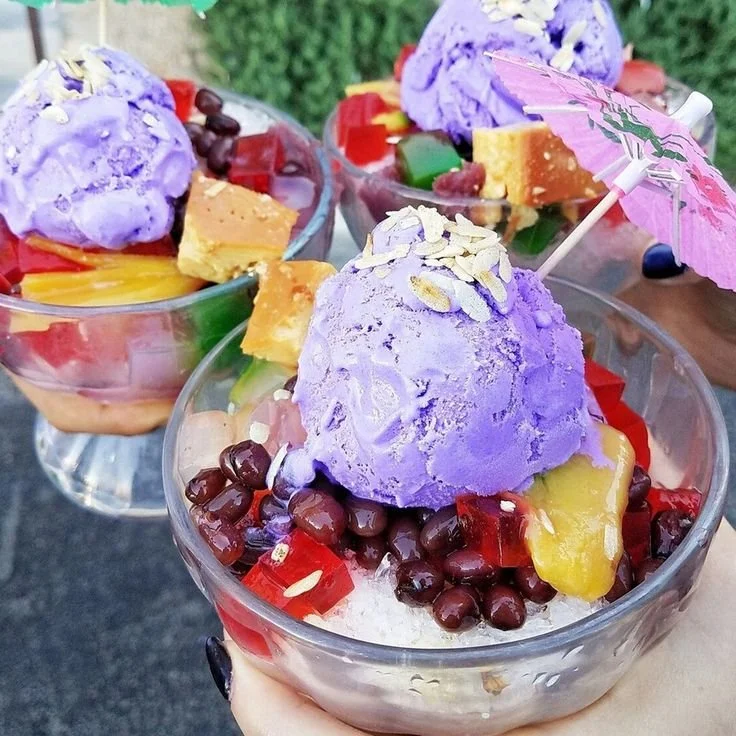
No Filipino summer is complete without halo-halo, one of the country's most beloved desserts. Summer is considered peak halo-halo season, and it's common to see it advertised everywhere—from roadside stalls and local eateries to restaurants and shopping malls. For many Filipinos, enjoying halo-halo is a tradition that signals the arrival of summer.
The name halo-halo literally means "mix-mix" in Filipino, which perfectly describes how the dessert is enjoyed. A traditional halo-halo begins with layers of sweet ingredients such as sweetened beans, nata de coco, kaong (sugar palm fruit), jackfruit, saba bananas, and gulaman. These ingredients are placed in a tall glass before being topped with finely shaved ice and evaporated milk.
What makes halo-halo truly special are the toppings. One of the most loved ingredients is ube, a vibrant purple yam that adds a rich, sweet flavor and beautiful color to the dessert. Halo-halo is often topped with creamy ube halaya (ube jam), leche flan, pinipig (crispy rice flakes), and a scoop of ice cream. Before eating, everything is mixed together, creating a refreshing combination of flavors and textures that is uniquely Filipino.
For many of us, halo-halo is more than just a dessert. It's a reminder of family outings, hot summer afternoons, and moments spent sharing laughter with the people we love.
Summer Gatherings and Fiestas
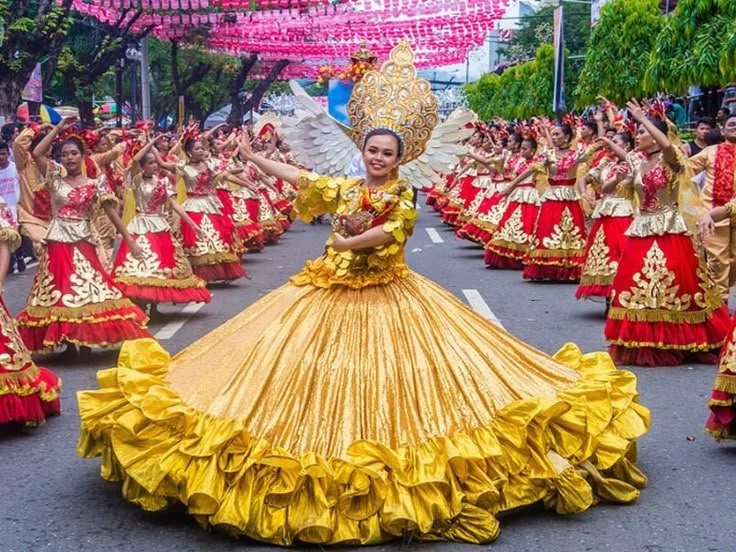
Summer is also a season of celebrations. Family reunions, town fiestas, church festivals, and neighborhood gatherings bring people together around tables filled with home-cooked food.
In Filipino culture, hospitality is deeply valued. Guests are welcomed warmly, and no one is allowed to leave hungry. Summer often provides countless opportunities to share meals with relatives, friends, neighbors, and even strangers who become friends by the end of the day.
These gatherings remind us that food has always been one of the ways Filipinos express care, generosity, and community.

Merienda: A Daily Summer Tradition
Another tradition that stands out in my memories is merienda, the beloved Filipino snack time.
Whether it was warm pandesal in the morning, turon in the afternoon, banana cue from a street vendor, or halo-halo after a day spent outdoors, merienda created opportunities to pause and connect. It wasn't simply about satisfying hunger—it was about gathering together, catching up, and enjoying each other's company.
Even the simplest snacks often became memorable moments because of the people we shared them with.
© Unsplash.com
The Lessons Summer Taught Me
As I've grown older, I've come to appreciate that the most valuable lessons from those summers weren't really about the food. They were about connection.
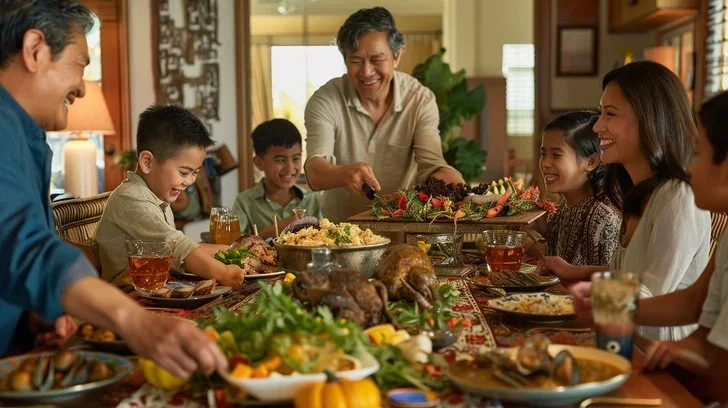
Food simply gave us a reason to slow down and be present with one another. Some of the best conversations happened around a table. Some of the loudest laughter came while sharing a meal. Some of the strongest relationships were built through these simple moments together.
Perhaps that's why the memory of a boodle fight stays with me. Everyone gathers around the same table, sharing the same food, with no one sitting at the head and no one left out. In many ways, it reflects what Filipino summer culture is all about: community, generosity, and the belief that meals are meant to be shared.
© stockcake.com
More Than a Meal
Today, life moves much faster than it did during those childhood summers. Schedules are busier, and meals are often squeezed between responsibilities. But those summer memories continue to remind me of something important: food is about more than nourishment.
It has the power to bring people together, strengthen relationships, and create memories that last long after the meal is over.
Looking back, I don't remember every destination we visited or every activity we did during summer break. What I remember most are the conversations around the table, the laughter shared over a meal, gathering around a boodle fight, stopping by a vendor for a cold samalamig, and enjoying a bowl of halo-halo on a hot afternoon.
More than anything, I remember the feeling of being surrounded by people who mattered.
That's what Filipino summers taught me: food is more than a meal—it's family, connection, and the memories that stay with us long after summer ends.
-Shania
#FilipinoFood #PinoySummer #BoodleFight #HaloHalo #FilipinoCulture #FilipinoTraditions #ComfortFood #FamilyConnection #PinoyFoodie #MoreThanAMeal
