

Why Christmas Starts in September in the Philippines: The Heart Behind the World’s Longest Holiday Season
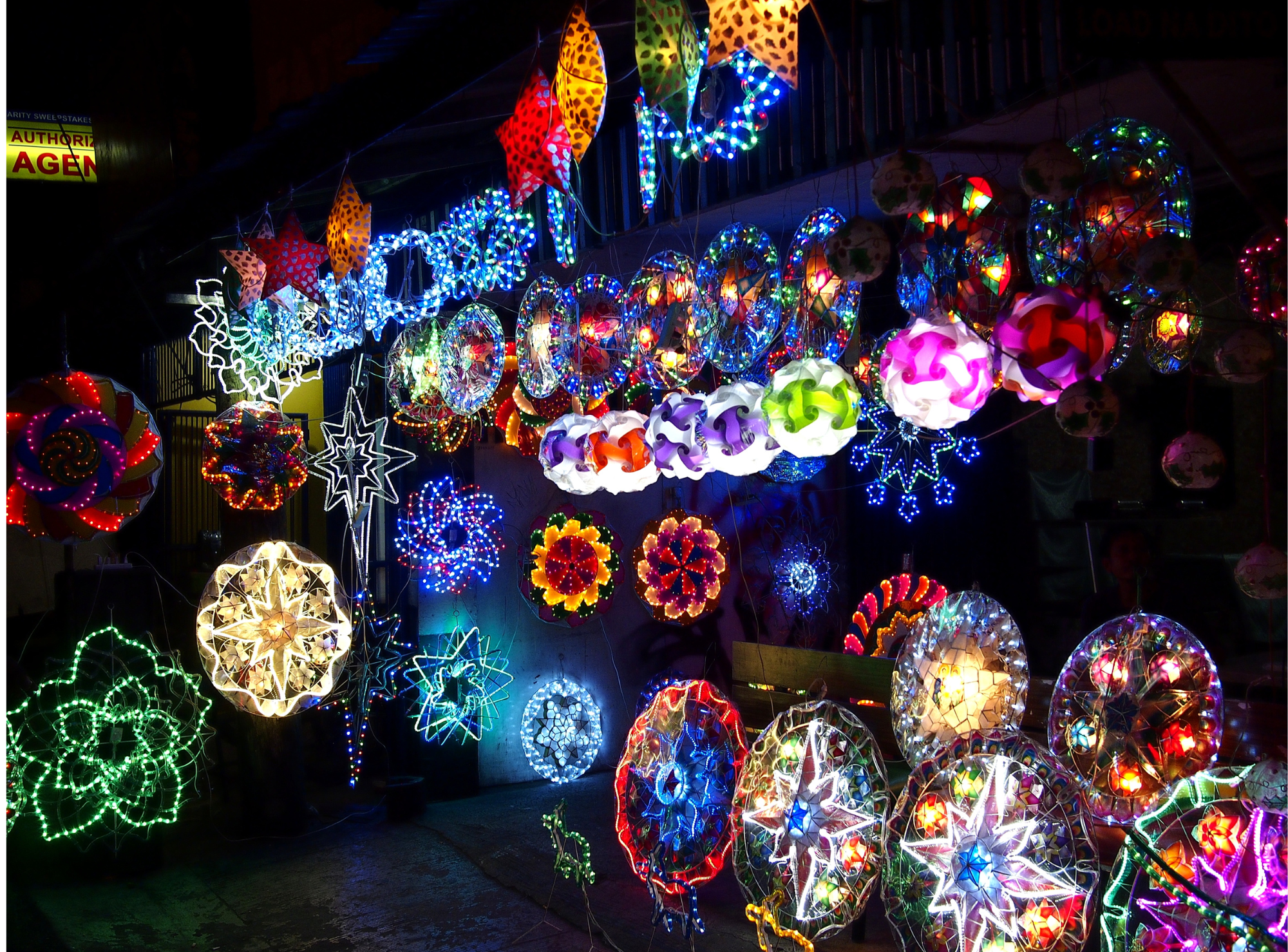
If you’ve ever visited the Philippines or followed a Filipino online, you’ve probably noticed something unusual.
By September, Christmas songs start playing.
Malls glow with lights.
Someone somewhere is already humming “Whenever I see girls and boys…”
To outsiders, it feels too early.
But for Filipinos, it feels right.
Christmas doesn’t start in December for us.
It starts the moment the air changes, the “ber” months arrive, and something familiar stirs in the chest.
Christmas Is a Feeling We Don’t Rush
In many countries, Christmas is a date on the calendar.
In the Philippines, it’s a season of the heart.
Starting Christmas in September isn’t about excess or decorations. It’s about stretching joy. Life here can be heavy, with financial worries, long workdays, loved ones working abroad, and storms that arrive uninvited. When something brings light, we hold onto it for as long as we can.
Christmas gives people something to look forward to.
And in a country where hope is essential, four months doesn’t feel too long; it feels necessary.
The Quiet Power of Simbang Gabi
One of the most meaningful Filipino Christmas traditions is Simbang Gabi. It’s nine dawn masses leading up to Christmas Day.
Waking up before sunrise, wrapping yourself in a jacket, walking to church while the streets are still quiet, there’s something grounding about it. It’s not loud. It’s not flashy. It’s personal.
When you get there, the church is packed. You’ll notice it’s full from the inside out, with people standing shoulder to shoulder, families squeezing in wherever they can, yet somehow it doesn’t feel cramped. There’s this shared energy, this quiet excitement, this sense that everyone is part of something bigger than themselves.
And the best part? After finishing all nine masses, there’s this deep sense of accomplishment.
For many families, Simbang Gabi isn’t about obligation. It’s about intention. A reminder to pause, reflect, and give thanks before the celebration begins.
And of course, there’s what comes after.
Puto Bumbong, Bibingka, and Shared Mornings
After Simbang Gabi, the smell reaches you before anything else.
Puto bumbong, that deep purple rice cake steamed in bamboo, brushed with butter and dusted with sugar and coconut.
Bibingka, soft and warm, cooked over hot coals, topped with salted egg and cheese.
These aren’t just food. They’re memories.
They’re eaten standing up, shared with family, neighbors, and strangers. No one rushes. People talk. People laugh. Sometimes they just stand quietly, enjoying the warmth of both the food and the moment.
During Christmas, food in the Philippines is never just food.
It’s connection.
A Simple Puto Bumbong–Inspired Recipe You Can Try at Home
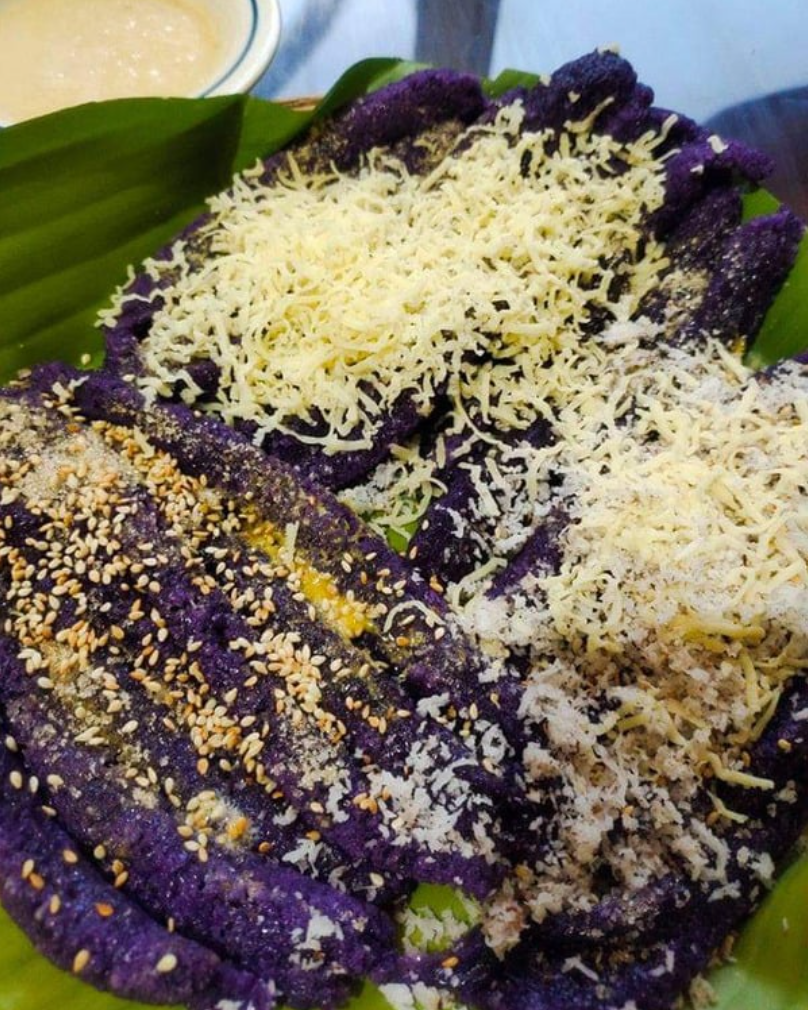
If you grew up in the Philippines, puto bumbong is tied to early mornings, cold air, and Christmas quietly unfolding. While the traditional version uses special purple rice and bamboo steamers, this simple version captures the same comforting flavors—perfect for recreating the feeling at home.
Ingredients:
1 cup glutinous rice flour
½ cup rice flour
¾ cup coconut milk
½ cup water
½ cup brown sugar
Butter (for topping)
Grated coconut
Extra sugar, to taste
Instructions:
In a bowl, combine the glutinous rice flour and rice flour. Slowly add the coconut milk and water, mixing until you get a thick but pourable batter.
Lightly grease small heatproof molds or ramekins. Pour the batter in, filling them about three-quarters full.
Steam for 15–20 minutes, or until firm and cooked through.
Remove from the molds, brush generously with butter, sprinkle with sugar, and top with grated coconut.
It may not be cooked in bamboo or eaten outside a church at dawn—but the taste, the warmth, and the feeling it brings are close enough to take you back.
Noche Buena: Where Christmas Truly Feels Complete
On Christmas Eve, families gather for Noche Buena—a midnight meal that feels like the emotional center of the season.
There’s ham, queso de bola, spaghetti, lechon, fruit salad, each household with its own version. Some tables are simple. Others are overflowing.
But the most important thing isn’t what’s served.
It’s who’s there.
For some families, this is the one night everyone is home. For others, it’s bittersweet—an empty chair for a loved one working overseas, present only through a video call.
Still, the table is full. Because in Filipino culture, abundance isn’t about perfection.
It’s about showing up.
When Christmas Blends Into the New Year
In the Philippines, Christmas doesn’t end on December 25.
It gently rolls into New Year, carrying the same spirit of hope and togetherness.
If Christmas is about gratitude, the New Year is about belief.
Belief that things will get better.
A Loud Welcome to a Hopeful Year
As December 31 approaches, Filipino homes prepare for a celebration that’s impossible to miss.
There are fireworks, firecrackers, horns, whistles, and banging pots and pans. The noise isn’t chaos, it’s intention. The louder the welcome, the more bad luck gets scared away.
Children stay up late. Streets glow. The countdown feels collective, even among strangers.
Round Fruits, Polka Dots, and Full Pockets
New Year traditions are filled with symbolism.
Families prepare 12 round fruits, one for each month, to invite prosperity. People wear polka dots believing they attract abundance, and many also wear the lucky color of the year to bring extra fortune.
Coins are placed in pockets, sometimes even shaken at midnight, as if calling wealth to come closer.
Laughter fills the air as karaoke sessions kick off, with family members singing their hearts out to welcome the New Year together.
At the stroke of twelve, tables are full. Not because anyone can predict the future, but because starting the year with abundance, music, and joy feels like a promise to yourself.
Why We Start Early and Hold On Long
So why does Christmas start in September and end well into January?
Because we believe joy deserves time.
Because hope feels stronger when shared.
Because celebration, for us, is an act of resilience.
Christmas and New Year in the Philippines aren’t loud because they’re shallow.
They’re loud because they’re alive.
They live in parols glowing in windows, dawn masses and midnight meals, sticky rice cakes and round fruits, early carols and late-night fireworks.
And when September comes, we don’t ask, “Isn’t it too early?”
We simply smile and say,
“Pasko na.”
Because for Filipinos, the holidays aren’t just dates.
They’re a season we carry. Long, imperfect, joyful, and full of heart.
#FilipinoChristmas #ChristmasInThePhilippines #PhilippineTraditions #FilipinoCulture #SimbangGabi #FilipinoNewYear #PaskoNa #PinoyTraditions #ChristmasTraditions #CulturalStories
